Showing posts with label Wikileaks. Show all posts

Friday, June 17, 2022

UK Home Office Signs Off On Assange Extradition (Next Appeal Pending in 14 Days)


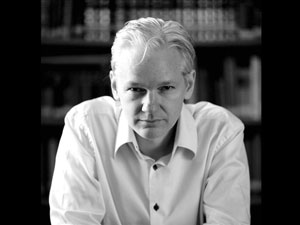
Yes, that's our Julian Assange update theme, in honor of the whitest-skinned person to ever come from Australia. 

He's in the news today because the UK Home Office has affirmed the U.S. extradition order that was upheld by the UK High Court in December. 

Assange has spent the last three years fighting extradition from Belmarsh Prison, where the UK authorities put him due to his habit of skipping bail. Before that he spent seven years in the embassy of Ecuador hiding from Swedish authorities who wanted to investgate him on complaints of rape and sexual assault. Now, he has 14 days to appeal the Home Office decision, which of course he will. Depending on how that goes, he'll next appeal to a European human rights court. 

How much longer can he possibly delay his delivery to American justice? Almost indefinitely, I think. At least, he seems in no hurry to leave his life behind the walls, having spent the last ten of his fifty years in what is basically self-imposed confinement. 

Assange is an Australian citizen, improbable as that might seem given his extreme pallor, and he seems to have a supporter in his Foreign Office. As CNN reports:
On Friday, Australia's Foreign Office issued a statement noting the UK decision to extradite Assange, who is an Australian citizen, adding: "We will continue to convey our expectations that Mr Assange is entitled to due process, humane and fair treatment, access to proper medical care, and access to his legal team."
Of course, he can get all that stuff in a U.S. prison. And due process? Assange has gotten exremely undue process, if you ask me. I mean, he's spent ten years fighting a reckoning in a U.S. court that would likely result in a sentence of far less than that. Besides which, he would be able to do that time in an Australian prison thanks to a bilateral agreement.

What the hell, Assange? Would you rather spend the next ten years in Belmarsh than face the music in a U.S. court and get it over with?
 

Thursday, August 16, 2012

Julian Assange Turns A Whiter Shade Of Pale


I had no idea that the UK is legally prepared to unilaterally withdraw recognition of a diplomatic premise. Not that I think they will actually do it, at least, not over the minor melodrama that is Julian Assange's Excellent Ecuadorian Embassy Adventure, but I am pleased that they at least raised the possibility.

The BBC reported today on the UK 'threat' to arrest Wikileaks founder:

The UK Foreign Office says it can lift the embassy's diplomatic status to fulfill a "legal obligation" to extradite the 41-year-old.

The law the UK has informed Ecuador it could use in the case is the Diplomatic and Consular Premises Act 1987 [read it here].

It allows the UK to revoke the diplomatic status of an embassy on UK soil, which in this case would potentially allow police to enter the building to arrest Mr Assange for breaching the terms of his bail.

The act was introduced after PC Yvonne Fletcher was shot outside the Libyan Embassy in London in 1984.


You can see a contemporary British TV news report on the murder of 25-year-old Police Constable Fletcher here. All these years later, delivering her killer to justice is still a political football between the UK and the new, improved, Libya.

The idea of a host country revoking the diplomatic recognition of a premise that is being used for un-diplomatic activity appeals to me. Has the U.S. made that kind of legal provision? If not, we should.

The New York Times has some details on Assange's condition inside the Embassy of Ecuador:

The WikiLeaks founder sleeps on an air mattress in a small office that has been converted to a bedroom, according to accounts of those who have visited him. He has access to a computer and continues to oversee WikiLeaks, his lieutenants have said. Reporters outside the building have seen food being delivered from nearby restaurants.

His presence is a challenge for employees of the embassy. One British government official, citing a conversation with a member of the embassy staff, said that the situation was surreal.

A diplomat familiar with Mr. Assange’s situation said that he spent his time in a back room, which gets no direct sunlight. Several weeks ago he had a bad cold and appeared depressed, the source said.

“He can’t get outside to see the sun,” his mother, Christine Assange, said in a recent interview conducted in Quito for BBC Mundo, a BBC Web site. “I’m worried about his health, as I would be for anybody who is having to stay indoors and not get exercise and have sunlight.”

She said some of Mr. Assange’s friends have encouraged him to put on music and dance as a way of getting physical activity and that they had also brought sunlamps.”


I still say Assange looks like David Bowie's Thin White Duke stage persona from the 1970s.

Maybe the sunlamps will help Assange with his vitamin D deficiency and seasonal affective disorder. But I don't think anything can help him with that major case of melanin impoverishment he's got going on. Assange is undoubtedly the lightest-skinned human being ever to come out of Australia. If he gets any paler he might turn translucent and slip right past the British police on watch outside the embassy.

Give him some color with this before he gets away.

Saturday, March 5, 2011

U.S. Ambassador to Mexico Another Wiki-Casualty?


Mexico's President Calderon was in Washington yesterday for a one-day visit. The WaPo reports that he pronounced himself highly offended by our embassy's frank assessments of his government's continued shortcomings in its muddled, but nevertheless laudatory, war against the drug cartels, and he threatens to take out his resentments on the U.S. Ambassador to Mexico.

Mexican President Felipe Calderon said Thursday that the release of State Department cables criticizing Mexico's anti-drug fight had caused "severe damage" to its relationship with the United States and suggested that tensions had risen so dramatically that he could no longer work with the American ambassador in his country.

Calderon's comments were the strongest to date on the secret cables distributed by WikiLeaks, which have threatened to disrupt what both sides have hailed as increasingly close cooperation against Mexico's violent drug gangs.

The Mexican president, at the start of a one-day visit to Washington, suggested that the release of the cables had caused turmoil on his national security team. He took aim at one U.S. cable that said that Mexican military officials had "risk-averse habits."

"It's difficult if suddenly you are seeing the courage of the army [questioned]. For instance, they have lost probably 300 soldiers ... and suddenly somebody in the American embassy, they [say] the Mexican soldiers aren't brave enough," Calderon told Washington Post reporters and editors.

"Or you decide to play the game that they are not coordinated enough, and suddenly start to bring information to one agency and not to the other and try to get them to compete."

Calderon's remark appeared to be a reference to a cable signed by Ambassador Carlos Pascual that described how the Mexican navy captured a major trafficker after U.S. officials gave them information that the Mexican army had not acted upon.

"We have an expression in Mexico, which says, 'Don't help me, compadre,'" Calderon said sarcastically, using the Spanish word for a close friend.

Asked whether he could continue to work with the U.S. ambassador, the Mexican leader said, "That is a question that maybe I will talk [about] with President Obama." The two leaders were scheduled to meet at midday.

Pressed on whether he had lost confidence in Pascual, Calderon paused and then said, "It's difficult to build and it's easy to lose."

-- snip --

If Pascual was recalled, he would be the most prominent U.S. casualty of the WikiLeaks scandal. Only one American ambassador has had to leave the country where he was based because of the cables - Ambassador Gene Cretz, who took an extended break from Libya before the anti-government demonstrations erupted there.


Read the whole thing here - Calderon: WikiLeaks caused severe damage to U.S.-Mexico relations.

Calderon had already aired his resentments more extensively in an interview with El Universal, the Mexico City daily paper:

As officials from both countries vow to jointly avenge the murder of a U.S. federal agent, Mexican President Felipe Calderon has accused senior American diplomats of damaging the cross-border relationship with criticism of Mexico's public security forces.

In a wide-ranging interview published Tuesday in El Universal, one of Mexico City's leading newspapers, Calderon charged that U.S. Ambassador Carlos Pascual's "ignorance has translated into a distortion of what is happening in Mexico" that has caused "an impact and an irritation in our own team."

Calderon was reacting to a barrage of analytic cables - some signed by Pascual, others by senior embassy officials - that discuss the perceived shortcomings of Mexico's intelligence services, the conduct of its army in Calderon's anti-crime campaign and the inability of its security forces to work well with one another.

The U.S. Embassy offered no immediate reaction to the interview.

The cables, some classified secret, have been published by the website WikiLeaks, with still more appearing this week. Until Tuesday, Mexican officials have responded to the cables with shrugs and condemnations of WikiLeaks rather than the diplomats.

Not any more.

"They have done a lot of damage with the stories they tell and that, in truth, they distort," Calderon said of the cables in the interview.


Read the original, Spanish language, interview here.

By the way, I notice that President Calderon offered a derogatory assessment of his own in that interview. He used an idiomatic expression to compare U.S. government agencies to the comically confused characters in a Cuban popular song:

“They themselves are like ‘Borondongo’…, Barnabas hit the CIA and the DEA or ICE, really not coordinated, even compete with each other …”.


"Borondongo" is a catchy tune, one that was covered by Celia Cruz, in which a character named Fuchilanga casts a voodoo spell on a village idiot named Burundanga, causing his feet to swell, after which a friend of Burundanga named Bernabé (Baranabas) hits Fuchilanga, and Borondongo, a friend of Fuchilanga, hits Bernabé, and so on. The word is a slang term for a hopelessly confused mess.

That might be a pretty fair analogy to the usual state of interagency cooperation, frankly, but it is still an insult and we are as entitled to be offended by it as Calderon is by our embassy's reporting cables. More entitled, since our cables are carefully substantiated by actual facts.

Speaking of which, if you are feeling bold enough to view those WikiLeaks cables that caused all this ruckus, I've placed a link to them below the warning.

CAUTION! CAUTION! CAUTION!

NOT SAFE FOR WORK!

View them [link redacted, due to somewhat exaggerated official concern], if you dare, but only on a personal computer, and then immediately forget what you saw.
Wednesday, January 5, 2011

Wiki-Whinging About Increasing Security Measures

The Wiki-Wallop that was delivered to the USG's classified information holdings in 2010 has, predictably, resulted in a backlash that will tighten up our info security measures. And that, ironically, does damage to responsible advocates of declassification and disclosure such as the Federation of American Scientists' Project on Government Secrecy.

FAS finds itself Wiki-Whipsawed. It denounced WikiLeaks, and paid the price for that in loss of esteem from the more extreme openness advocates. And yet, its own project will now suffer as the USG responds to WikiLeaks by retreating further into its shell of secrecy.

FAS did some justified Wiki-Whining yesterday in a post about Tightening Security in the “Post-WikiLeaks” Era. They make a good point:


The Wikileaks model for receiving and publishing classified documents exploits gaps in information security and takes advantage of weaknesses in security discipline. It therefore produces greater disclosure in open societies, where security is often lax and penalties for violations are relatively mild, than in closed societies. Within the U.S., the Wikileaks approach yields greater disclosure from those agencies where security is comparatively poor, such as the Army, than from agencies with more rigorous security practices, such as the CIA.

What this means is that Wikileaks is exercising a kind of evolutionary pressure on government agencies, and on the government as a whole, to ratchet up security in order to prevent wholesale compromises of classified information. If the Army becomes more like the CIA in its information security policies, or so the thinking goes, and if the U.S. becomes more like some foreign countries, then it should become less vulnerable to selective security breaches.


Regarding that ratcheting-up of security, FAS linked to a January 3, 2011, memo from the Office of Management and Budget titled “Initial Assessments of Safeguarding and Counterintelligence Postures for Classified National Security Information in Automated Systems” [here]. The memo includes an 11-page list of questions and prompts for USG agencies to use in their security self-assessments.

I was relieved to see that blogging and social networking were not mentioned in the assessment criteria. However, there was this:


Have you conducted a trend analysis of indicators and activities of the employee population which may indicate risky habits or cultural and societal differences other than those expected for candidates (to include current employees) for security clearances?


Undefined "risky habits" could be a broad enough category to justify monitoring of government employee blogging, perhaps. We'll see.

There was also this:


Do you use psychiatrist and sociologist to measure:

o Relative happiness as a means to gauge trustworthiness?
o Despondence and grumpiness as a means to gauge waning trustworthiness?


So, will we see shrinks assessing employee trustworthiness according to some approved ratio of happiness-to-grumpiness? And how do you measure that, anyway? Is there a happiness dipstick?

Friday, December 31, 2010

Wiki-Whizzzzz


The State Department dodged a bullet last May, according to the WaPo.

In a WaPo story with a somewhat misleading headline, WikiLeaks cable dump reveals flaws of State Department's information-sharing tool, we learn that:

A few State Department officials expressed early concerns about unauthorized access to the [Net-Centric Diplomacy] database, but these worries mostly involved threats to individual privacy, department officials said. In practice, agency officials relied on the end-users of the data - mostly military and intelligence personnel - to guard against abuse.

The department was not equipped to assign individual passwords or perform independent scrutiny over the hundreds of thousands of users authorized by the Pentagon to use the database, said Kennedy, the undersecretary of state.

"It is the responsibility of the receiving agency to ensure that the information is handled, stored and processed in accordance with U.S. government procedures," he said.


Indeed. That's what is somewhat misleading about the headline, since the "flaws" in that info-sharing tool were introduced when the Army allowed PFC Manning to pretty much run amok with its classified computer databases.

But here's the bullet-dodging moment:

Although it is perhaps small comfort, the disclosures could have been worse. In May, the Obama administration's top intelligence officer asked the State Department to expand the amount of material available to other agencies through Net-Centric Diplomacy.

In a letter to Secretary of State Hillary Rodham Clinton, then-Director of National Intelligence Dennis C. Blair urged that the database include not only cables but also e-mails between State Department officials. Such a move would "ensure that critical information will reach the necessary readers across the government," Blair wrote.

Clinton refused.


Having cable traffic in the public view is bad enough, but imagine how much worse it would be if WikiLeaks had your e-mails as well.

That was close.

Tuesday, December 7, 2010

It's Not His Bag, Baby


Julian Assange is looking very Austin Powers International Man of Mystery-ish in the photo that accompanied the UK Daily Mail's account of his Swedish legal problems. That's quite a Swinging 60s Carnaby Street kind of thing going on with that jacket.

Maybe emulating Powers was the cause of those problems, since Austin believed that "only sailors use condoms, baby."

Saturday, December 4, 2010

Wiki-Warm Up (611 Down, 249,389 to Go)

Unredacted points out the depressing fact that:

It’s day five of the wikileaks cable dump and (as of this writing) 611 cables have been released (less than half of one percent of the total 250,000).


To be precise, 611 cables is only .00244 percent of the total. At that rate, it will take EIGHT YEARS to get to the end.

On the brighter side, Unredacted also asked the fascinating question:

Imagine if Prince William [a reference to 08 BISHKEK 1095] and Joe Biden were ever in a room together.


Surely, that fated meeting must have already happened somewhere. Two of the greatest blowhards on the world scene today simply have to have encountered each other at some reception or conference or other function. The poor note taker at that marathon gabfest probably came down with severe tendinitis in his or her pen hand. Would somebody please leak that cable? I'd love to read it the next time I have a free week.

In another post, Unredacted linked to the telephone conversation in which President Nixon was informed by Al Haig of the Pentagon Papers leak. Nixon's reaction was to fire people:

I’d just start right at the top and fire some people. I mean whoever – whatever department it came out of I’d fire the top guy.


Unredacted goes on to say that "In Obama’s case, it would be the top gal, Secretary of State Hillary Clinton." However, that is incorrect, since Hillary is not guilty in this mess. These cables, like the Pentagon Papers, were leaked out of the Defense Department.

Hillary said as much at her press conference yesterday in Manama:

Asked how such a huge leak could have occurred and why no alarm bells went off when a low-level intelligence analyst allegedly downloaded 250,000 classified diplomatic cables, Clinton replied: "The decision was made in the Bush administration to add the diplomatic cables to the Defense Department's special network that was created for that purpose."

While she defended the move as defensible at the time, she emphasized that these policies were being rolled back in the wake of the WikiLeaks crisis, perhaps for good.

"The process was undertaken in order to do a better job of what's called ‘connecting the dots,' because after 9/11, one of the principle criticisms of the government was that the information was stovepiped, that the Defense Department knew things that the State Department didn't know, that the White House didn't know," Clinton explained. "So it was understandable for the Bush administration to say, ‘We need to end the stovepiping and figure out how to have greater situational awareness and sharing of information.'"

Without identifying anyone by name, she then said that it was in the Defense Department, not the State Department, where the leak occurred.


I think firing some senior people would be an excellent response to this disaster, but let's aim before we fire.

Friday, December 3, 2010

Wiki-Weirdness


Will the truth about UFOs finally be revealed, and by Wikileaks?

WikiLeaks founder Julian Assange on Friday in an online chat with the British newspaper The Guardian said that some of the upcoming U.S. diplomatic cables address unidentified flying objects (UFOs).


My mind reels. Does the USG have bilateral relations with extraterrestial visitors? If so, I wonder how we deliver dipnotes and demarches? And where do we find translators, and have we hired any alien LES?

Most importantly, can we get some technology transfer? Those ETs must have overhead surveillance capabilities so awesome that they would make the New START treaty a reasonable risk.

But I'm prepared to be disappointed. There could be a more earth-bound meaning to the term "UFO." Assange's next big data dump is supposed to be of stolen files from the Bank of America, or so he has said. In that case, the UFOs in question might turn out to be something like Unfunded Financial Obligations.

Wednesday, December 1, 2010

"It Revises Upward My Personal Opinion of the State Department"

NPR's Morning Edition interviewed Garton Ash, a British historian, today on his impressions of the wiki-windfall of leaked diplomatic reporting. He had complimentary things to say about that reporting.

RENEE MONTAGNE: Some of these dispatches, they have a novelistic quality, a literary quality.

Prof. GARTON ASH: Again, I'm very impressed. There's a wonderful and hilarious account of a Dagestani wedding attended by the president of Chechnya with his gold-plated automatic stuffed down the back of his jeans. There's extraordinary stuff in there. But that's, in a sense, the icing on the cake, to change the culinary metaphor ... The real substance is the serious political reporting.

-- snip --

MONTAGNE: Does any of it that you've seen so far in these cables change fundamentally your view of how the world works?

Prof. GARTON ASH: Well, it revises upward my personal opinion of the State Department. In other words, what I've seen about how they report and how they operate is really quite impressive. Secondly, what emerges very, very clearly is that if this were a person, it would be a traumatized person - someone who'd gone through a great shock, and that shock was, of course, 9/11. And the way in which security and counterterrorism concerns permeate almost every aspect of U.S. diplomacy in whatever country it is, is for me very striking.


You can listen to the four-minute interview here.

I've noticed similar comments from other interviewees recently. So you can't say nothing good ever came out of this mess.

------------------------------------------------------------------

Update - Just saw another example:

Wikileaks founder Julian Assange crowed yesterday that the State Department "is going to have a hard time of it trying to spin" his organization's ongoing document dump. U.S. diplomats, he said, will "find their very privileged position in life undermined by having their lies revealed."

Presumably, he wasn't talking about the latest tranche of documents, which cover the 2005 civil unrest in the French banlieues and the subsequent U.S. perspective on France's integration (or lack thereof) of its Muslim minority. These cables show the U.S. diplomatic corps grappling reasonably with how to bring American resources to bear to improve this endemic problem in French society.

-- snip --

In short, these are the most sensible, boring cables that I've come across yet. And I'm at a loss why Julian Assange thinks that they will do anything but increase the American public's belief that its government, by and large, acts responsibly on the international stage


Read the rest here.

Wiki-Wannabe

Der Spiegel Online reports:

A group of former members of WikiLeaks is planning to launch its own whistleblowing platform in mid-December, according to a German newspaper. The activists criticize WikiLeaks for concentrating too much on the US and want to take a broader approach.


-- snip --

Domscheit-Berg [the former Germany spokesman for WikiLeaks who played Number 2 to Assange's Dr. Evil] criticized WikiLeaks for concentrating on publishing material about the US while other information was neglected. "There was a lack of transparency about how decisions had been reached," he told the newspaper. "That's why I trust this organization as little as I would trust another organization with similar problems."

Wiki-Wily

Evidently everybody values privacy - even secrecy - sometimes. The WaPo reported yesterday that Wikileaks demanded legally enforceable confidentiality agreements of the news outlets it used to distribute the USG's private message traffic:

WikiLeaks asked CNN and the Wall Street Journal to sign confidentiality agreements that would have entitled WikiLeaks to a payment of around $100,000 if the partner broke the embargo, according to people briefed on the agreement who asked not to be named because they weren't authorized to disclose the information publicly. The agreement also stipulated that WikiLeaks could enforce the terms of the agreement in a court of WikiLeaks' choosing.


Just because Assange is a hactivist doesn't mean he won't sue you for breaking a non-disclosure agreement.

Tuesday, November 30, 2010

Wiki-Warrant


Have you seen this man? If so, please contact Interpol, which has issued a "Red Notice" (see below) to request the assistance of its 188 member countries in locating Assange with a view to his arrest and extradition to Sweden. Prosecutors there would like to speak with him regarding certain allegations of sex crimes.


Wanted
ASSANGE, Julian Paul
Legal Status

Present family name: ASSANGE
Forename: JULIAN PAUL
Sex: MALE
Date of birth: 3 July 1971 (39 years old)
Place of birth: TOWNSVILLE, Australia
Language spoken: English
Nationality: Australia

Offences

Categories of Offences: SEX CRIMES
Arrest Warrant Issued by: INTERNATIONAL PUBLIC PROSECUTION OFFICE IN GOTHENBURG / Sweden

IF YOU HAVE ANY INFORMATION CONTACT

YOUR NATIONAL OR LOCAL POLICE


GENERAL SECRETARIAT OF INTERPOL


©Interpol, 1 December 2010.

Wiki-Windfall for Diplo Historians

Here's a different perspective on CableGate. The Director of the (non-governmental, George Washington University-based) National Security Archive was interviewed on a public radio station today and he discussed how diplomatic historians will use this unauthorized data dump of a quarter million cozened cables.

Listen to the interview here.

Sunday, November 28, 2010

Those Stolen Cables ...

... were delivered to selected news media last Friday, and are now being published. Browse them [links redacted due to most likely exaggerated official concern].

How bad is it? Der Spiegel calls it a "meltdown" for U.S. foreign policy:

251,000 State Department documents, many of them secret embassy reports from around the world, show how the US seeks to safeguard its influence around the world. It is nothing short of a political meltdown for US foreign policy.


The New York Times is a bit less excitable and merely refers to "brutally candid views" and "frank assessments" that have now been exposed:

A cache of a quarter-million confidential American diplomatic cables, most of them from the past three years, provides an unprecedented look at backroom bargaining by embassies around the world, brutally candid views of foreign leaders and frank assessments of nuclear and terrorist threats.


Wikileaks is tweeting tidbits about the leak and reactions to it, using the hashmark #cablegate.

Saturday, August 28, 2010

Wikileaks Founder Has a New-Found Appreciation For Official Secrecy

Here's a question for any David Bowie fans out there. Doesn't Julian Assange look a lot like The Thin White Duke, David Bowie's 1976 stage persona? That's what I think of every time I see a photo of Assange.


But that is not what concerns me tonight. Instead, I wonder why Assange is complaining about a government official who leaked something to the press. The leak was about Assange himself, but hey, the man never saw a leak he didn't like before. Why is he violating his principles now?

Assange is not yet in the clear on criminal investigations in Sweden. But, in a bizarre twist, the prosecutor who issued papers for his arrest has herself been reported to the Swedish Prosecution Service by a due-process watchdog group for - of all things - violating Assange's privacy.

According to Swedish press reports:

The prosecutor who issued the warrant for the arrest of WikiLeaks founder Julian Assange has been reported for violating rules on the confidentiality of preliminary investigations, newspaper Dagens Juridik (DJ) reported on Tuesday.

The prosecutor on duty, Maria Häljebo Kjellstrand, decided on Friday to issue a warrant to arrest Assange on suspicion of rape. She later confirmed to Expressen that there was a case and that Assange was charged in absentia. The warrant was withdrawn one day later.

Due process organisation Rättssäkerhetsorganisationen (RO), which had previously notified the prosecutor through the Ombudsmen of Justice (Justitieombudsmännen, JO) for her conduct in connection with the decision to issue the warrant, has now supplemented its notification, the report said.

According to the organisation, the prosecutor violated the confidentiality of preliminary investigations by giving the media information about this case, DJ reported.

"We believe that the matter has been handled extremely badly for all parties involved and we are highly critical of how quickly one has taken the decision to detain a person," RO Chairman Johan Binninge told DJ.

"From an investigative standpoint, it is a disaster to go out in public this way, which can only harm the investigation. A prosecutor must also take into consideration all parties involved, including the suspect, and consider the consequences of a particular intervention for the suspect, in this case, an internationally known person," he added.

The supplement submitted to Swedish Prosecution Service Authority (Ă…klagarmyndigheten) information director Karin Rosander confirmed that the warrant decision includes the confidentiality of preliminary investigations. Rosander added that all decisions taken in the matter now be analysed, DJ reported.

Several newspapers, including Svenska Dagbladet, have indicated that the confirmation from the prosecutor had a decisive influence on the editorial decisions that were made.


Assange ought to man-up and ask the Swedes to drop their charges against his own personal leaker. Or at least publicly express support for her, or pay her legals bills, or something. It would be an act of noblesse oblige worthy of The Thin White Duke.