Showing posts with label Bureau of Overseas Building Operations. Show all posts

Saturday, November 27, 2021

New Embassy Compound Beirut - Why Will it Take a Decade and a Billion $$$ ?


Part of me is thrilled to no end that U.S. Embassy Beirut will, sooner or later, move out of its dinky and haphazard present facilities in East Beirut and into a big, purpose-built, New Embassy Complex. That is an occasion we've been waiting for ever since the previous embassy was destroyed by a suicide truck bomb in 1983, and then the East Beirut embassy annex itself was partially destroyed by a second suicide bomber in 1984. 

1983? 1984? What a long time ago. How many current State Department employees had not yet been born in those years? That replacement embassy has been a long time coming.

Not to spoil my good mood, but what explains the insanely long time between the start of the project and its projected completion date?     


As Diplopundit noted back in 2017, the project broke ground in April 2017, after a construction contract was awarded in December 2016, with completion anticipated in 2022. The design phase of the project was initiated in 2013 when a contract was awarded to Morphosis Architects. 

Morphosis? The same firm that designed the roundly hated Federal building in San Francisco? The building that has been called a green nightmare? The building that came in dead last in a GSA survey of employee post-occupancy satisfaction? Yes, the same. 

I know nothing from architecture, but I can easily understand all the hate for a 15-story office building in which the elevators stop only at every third floor, where the employees can't have window shades to cut down on sun glare, where there is no heating or air conditioning (except in the manager's offices!), where there is no on-site cafe or restaurant for its 2,400 employees but there is a public plaza that attracted so much crime, trash, and drug use that it is now getting a big forbidding perimeter fence. 

To be fair, Morphosis' San Francisco design has also gotten some awards, however, none of them came from the poor wretches who have to work there. 

But enough said of the new embassy's architecture. I'm far more concerned about the project schedule.

Judging entirely from the embassy and Overseas Buildings Operations (OBO) press releases, it appears the plan was to spend five long years in the design phase - 2013 to 2017 - followed by another five long years in the construction phase. Project delays have now pushed the anticipated completion date out yet another year into 2023. But understand this: OBO intended to spend an entire decade to get that new embassy completed.

That is outrageous. I mean no offense to my good friends in OBO - and they really are my friends, I mean that sincerely - but WHAT WERE YOU THINKING when you approved a plan to build a new embassy in Beirut that would take an entire decade to complete? I'll put aside the matter of the 1+ billion dollar cost. Whatever happened to the sense of urgency that was the entire reason for the Capital Security Construction Program? 

A plain utilitarian office and residential compound that took half as long to complete as one of Morphosis' eccentric masterpieces would have been a far better choice.

Embassy Beirut employees have been living and working in a ramshackle collection of buildings on a hastily-secured compound for 37 years and counting. Granted the security environment in Lebanon is not so acute now as it once was, but still, Hizbollah has pretty much free run of the place so speed really ought to have been a much higher priority for OBO than whatever design excellence whim-wham it is that Morphosis is bringing so very slowly.

Friday, June 25, 2021

Fortress Embassy Niamey Has a Weird Facade


My good friends in the Bureau of Overseas Buildings Operations (OBO) just cut the ribbon on yet another new Fortress Embassy, this one in Niamey, which, I can tell you, really, really, needed one. See the details here: Dedicates the New U.S. Embassy in Niamey, Niger.

I have one question about the design. That rust-colored thing that covers all of the exterior windows and extends a bit above the roof, what is that? Probably a sun screen, I'm guessing, which makes sense for that climate.  

But doesn't it look exactly like the new southern border fence? 

The first section of completed new border fence 


Not that I mind an artistic reference to the border fence, you understand. However, I'm surprised that feature passed through so many architectural hands, from OBO itself to its construction contractor and their design firm, without someone objecting. 


Thursday, May 6, 2021

New Consulate Office Building in Hermosillo, Mexico, Topped Out


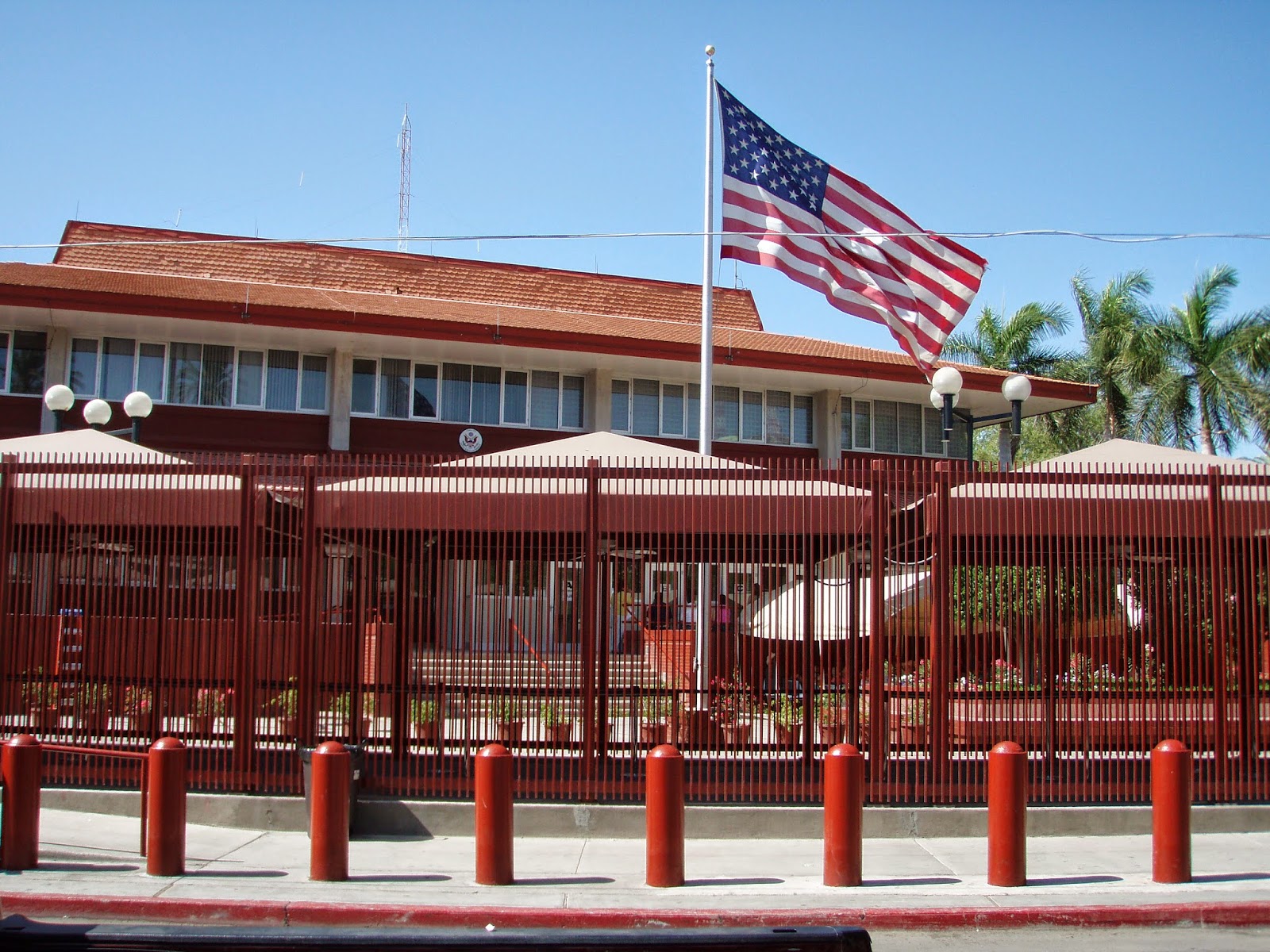
Sweet deal for CG Hermosillo, which gets to move out of the quirky building it has occupied since the early 1980s, the one that kind of resembles a Pizza Hut only with a pagoda roof. You can see it in this photo, courtesy of Mexican news media:


The old building was the product of a family-owned construction firm that at one time very nearly monopolized the diplomatic construction business of the USG in Mexico. The patriarch had been a subcontractor on the early 1960s embassy job in Mexico City and his two sons went on to build most of our consulates, including the ones in Tijuana, Guadalajara, Ciudad Juarez, and Monterrey. The family saved design expenses by using the exact same design to build both Juarez and Monterrey, which is commendable.

Hermosillo was the end of the family's streak of good luck, as by then OBO had finally decided it would henceforth take charge of its own business in Mexico. Ever since, OBO has been replacing one old Mexican consulate after another with 'safe, secure, and sustainable' New Consulate Compounds. Plus a New Embassy Compound, too, assuming that project ever gets completed.    

So, NCC Hermosillo marks the end of an era for OBO in Mexico. What's more, the old consulate was the last time OBO ever built a new office building anywhere in the world without taking security standards (boo, security) into account, because in that pre-Inman Commission day there were no standards, at least none that were mandatory.

Enjoy the new building, Hermosillo.
     

Saturday, April 10, 2021

Fortress Embassies to be Fully Funded in the New FY

(CG Guadalajara, according to an OBO design contractor) 


I love the architect's-pastel-watercolor-rendering stage of new embassy construction. The buildings never look half as good in execution as they do in the imagination. It's practically theater of the mind stuff. 

Well, there will be more such happy architectural dreaming this year because the new international affairs budget request has been published and it did not forget my good friends in the Bureau of Overseas Building Operations. They are looking at handling another year of capital security construction projects, i.e., new Fortress Embassies. 

It's on page 29 of the FY21 Congressional Budget Justification:
EMBASSY SECURITY, CONSTRUCTION, AND MAINTENANCE - The Bureau of Overseas Buildings Operations (OBO), funded through the Embassy Security, Construction, and Maintenance (ESCM) appropriation, is responsible for providing U.S. diplomatic and consular missions overseas with secure, safe, and functional facilities that represent the U.S. Government to the host nation and support the Department’s staff in their work to achieve U.S. foreign policy objectives. These facilities represent the best of American planning, design, engineering, construction, and facility management.
The FY 2021 Request is $1.7 billion. The work supported by this request is vital, as more than 93,000 U.S. Government employees from more than 30 agencies at over 291 locations depend on the infrastructure OBO provides and maintains. The FY 2021 Request includes the Department of State’s share of the $2.2 billion Capital Security and Maintenance Cost Sharing Programs to construct and maintain, new, secure facilities, and $100 million to address deferred maintenance for State’s non-cost shared facilities
Which lucky posts will get the next round of safe, secure, and functional new facilities? That is a carefully risk-managed decision, as is explained in this publicly available source of information:
OBO will continue to construct diplomatic facilities based on the Department's list of the most vulnerable facilities and to address other security concerns overseas consistent with available resources. This Vulnerability List, published each year by DS, ranks posts according to their vulnerability across different security threats. The process for identifying and prioritizing projects begins with a review of the Vulnerability List mandated by SECCA. The Vulnerability List is then used to establish the Top 80 list that helps OBO to prioritize facilities that need to reduce security vulnerability. In addition to new construction projects, OBO must also design and construct security upgrades to existing facilities. 
That sounds like a tricky business, but I assume whoever it is in DS who ranks overseas posts according to their vulnerability to security threats must know what he or she is doing.

Wednesday, December 2, 2015

House Oversight Committee Hearing on New London Embassy

The Crystal Fortress, in architectural vision


The New London Embassy construction project has come in for criticism from the House Oversight and Government Reform Committee before, and it will again on Tuesday, December 8, at 10 AM. Watch this space for live video: Review of the New London Embassy Project.

While you're waiting please enjoy Embassy London's weekly photos of the construction site, and let your inner architect be inspired by the designer's vision:
[The State Department] wanted to pursue a new paradigm in embassy design, termed Design Excellence, which emphasizes the role of architecture in diplomacy. This new model seeks buildings that represent the ideals of the American government—giving priority to transparency, openness, and equality, and drawing on the best of American architecture, engineering, technology, art, and culture.

Here's hoping my good friends in Overseas Buildings Operations will send their first string to handle the Committee. Which means Ambassador Will Moser. I really don't think that OBO's Director and her Deputy Director in Charge of Design Excellence are up to handling the hostile questioning that is likely to come to them.

Saturday, December 14, 2013

Malabo's Nice New Fortress Embassy, And Its Bad Old Days Of Mayhem


Image from KCCT website


The Bureau of Overseas Buildings Operations (OBO) has cut the ribbon on another new Fortress Embassy, this one in Malabo, and for the low, low, price of only $71 million. That's bargain basement.

I'm not being the least bit sarcastic about the cost. That has got to be the cheapest new embassy complex OBO has built in the last 10 years or more, especially considering that it includes staff housing, recreational facilities, and nearly self-sufficient site utilities, in addition to the chancery office building.

From the press release:
In an important symbol of our friendship and bilateral relationship with the Republic of Equatorial Guinea, Under Secretary for Management Patrick F. Kennedy, and U.S. Ambassador to the Republic of Equatorial Guinea Mark L. Asquino presided over the dedication of the new U.S. Embassy complex in Malabo today.

The new multi-building complex provides embassy employees with a safe, secure, and modern workplace. Situated on a 12.5-acre site in the Malabo Dos section of the capital, the complex includes a chancery building, a service/utility building, an access pavilion, Chief of Mission residence, Deputy Chief of Mission residence, staff housing, and a recreational facility.

The $71 million project incorporates numerous sustainable features to conserve resources and reduce operating costs, including an energy recovery unit that reduces the need for heating and cooling, water-conserving plumbing fixtures, and the use of regional and recycled materials. The new Embassy is registered with the U.S. Green Building Certification Institute as a Leadership in Energy and Environmental Design (LEED®) facility.

The facility was designed by Karn Charuhas Chapman and Twohey (KCCT) of Washington, DC, and constructed by Caddell Construction Co. of Montgomery, Alabama.

I'm delighted to read that the new embassy has an "access pavilion." A pavilion ... the very word makes me think of some pleasant little structure, maybe a nice shady place where the embassy staff can gather after work and have gin and tonics while they enjoy the spectacular equatorial sunset. But it's really just OBO's design excellence jargon for what is normally called a "compound access control" facility, i.e., a building for TSA-style screening of visitors.

Hey, OBO, people can see through that architectural happy talk. What's the point of trying to soften the reality of metal detectors and x-ray machines? Just call it a Compound Access Control facility, which is the official term. Even KCCT, your design firm on the Malabo project, uses that term in its own press releases for other embassy work.

KCCT, by the way, has made a specialty of overseas work for OBO and some other U.S. government agencies. That business model has been recession-proof, as described in a profile in a business journal last year:
D.C. architecture firm KCCT stays under the radar thanks to work on overseas embassies, consulates

The firm is now working on the Foreign Affairs Security Training Center for a possible 2,000-acre site near Fort Pickett in Blackstone, Va., where future diplomats will learn about terrorist tactics to help them prepare for working in dangerous locations abroad.

Over the past two decades, KCCT has come to specialize in designing overseas diplomatic facilities, creating 151 of those projects in 114 nations. Those commissions include 18 new embassy and consulate compounds in countries as varied as Angola, Kyrgyzstan, Pakistan and Vietnam.

No post about Equatorial Guinea would be complete without noting how completely bat guano crazy the country once was. The place has settled down nicely since oil was discovered and business interests took over, but in the 1960s and '70s Malabo was very likely the worst place in Africa. More horrendous than even Idi Amin's Uganda.

Globetrotting With Uncle Sam has a fine blog post from last February about the recent history of Murder and Violence in Malabo:

Since 1968 when the country became independent, Equatorial Guineans have lived under two repressive dictators, both stemming from the same family. The current president, Teodoro Obiang Nguema Mbasogo, is the nephew of the first president, Francisco, Marchias Nguema, who many considered insane and who on Christmas Day in 1975, has 150 coup plotters killed in the national stadium while a band played "Those Were the Days."

Shortly after independence, the State Department opened an embassy in Malabo and assigned two officers -- a charge' d'affairs and an administrative officer. The stress of opening an embassy on Fernando Po must have gotten to the Charge' as in 1971 he radioed the Embassy in nearby Yaounde, Cameroon to report that the Administrative Officer was involved in a communist plot. The embassy directed that the consul from Douala immediately charter a plane to Malabo and to take control of the embassy. Upon arrival he found that the charge' had killed the administrative officer in the embassy under very mysterious circumstances.

-- snip --

Equatorial Guinea has been the target for at least two coup attempts. The first, against former President Marchia, is said to be the setting for Fredrick Forseyth's book "The Dogs of War" which was made into a movie by the same name. The second, the so-called Wonga Coup, took place after oil was discovered. It was led by Simon Mann, an Englishman living in South Africa and the son of former British Prime Minister, Margaret Thatcher, is said to have helped finance this attempt.

Here's a first-person account of the 1971 incident by the FSO who was sent to Malabo in response to the chargĂ©'s bizarre radio calls and discovered the murder. The chargĂ©' was convicted of murder in a U.S. court despite being irrational and possibly insane, and it has never been made clear what exactly happened and why. His son later attributed the murder to a mental breakdown brought on by the terrorizing conditions of Malabo in 1971, however, the son was far too young at the time to be in a position to really know that. 

Forseyth's novel, "The Dogs of War," was extremely well-informed about the first coup attempt, and its plot anticipated the discovery of oil in Malabo, which discovery provided the motive for the later Wonga coup. The movie version of Dogs is worth watching - I found it on Netflix - for Christopher Walken's portrayal of the mercenary who goes a little crazy in a Malabo prison and then goes rogue on his London businessmen employers.

Malabo inspired murder in the movies, too


The movie had a happy ending. I mean, as happy as anything could get in Malabo in the days before the oil boom.
  

Tuesday, December 10, 2013

Art, Mm-Hmm, In Embassies

Sean Scully's 'Wall of Light Cubed 2'


As you may have read, the Art in Embassies program of the U.S. State Department shelled out one million dollars for the artwork depicted above, which will be displayed at the future new U.S. Embassy in London. The new embassy office building will be a work of art in its own right, so I guess we needed exactly the right sculpture to compliment the new building. Why the sculpture costs more than some entire buildings do, I just can't say.

The artwork of Sean Scully, which you can browse on his website, is not something I am qualified to judge, so here is an expert description:

Sean Scully is known for rich, painterly abstractions in which stripes or blocks of layered color are a prevailing motif. The delineated geometry of his work provides structure for an expressive, physical rendering of color, light, and texture. Scully’s simplification of his compositions and use of repetitive forms—squares, rectangles, bands—echoes architectural motifs (doors, windows, walls) and in this way appeals to a universal understanding and temporal navigation of the picture plane. However, the intimacy of Scully’s process, in which he layers and manipulates paint with varying brushstrokes and sensibilities, results in a highly sensual and tactile materiality. His colors and their interactions, often subtly harmonized, elicit profound emotional associations. Scully does not shy away from Romantic ideals and the potential for personal revelation. He strives to combine, as he has said, “intimacy with monumentality.”

I think I'm starting to see it ... yes ... intimacy combined with monumentality ... abstract, geometric, repetitive, and it echoes architectural motifs (the motif part sounds good to me). Plus, it is universal, sensual in a tactile way (do we get to touch this art?), and it elicits emotional responses.   

I can easily believe the part about eliciting emotional responses. With no disrespect for Sean Scully's artistry, any time the U.S. government spends a million dollars to buy a sculpture for display at an embassy you can be certain that there will be profound emotional responses, particularly from members of Congress. 

The incomparable State Department Deputy Spokesperson Marie Harf displayed some performance art of her own at last Friday's daily press briefing when she tried to explain why she thinks this purchase is "a good use of our limited resources" (yes, she does):

Okay, on the artwork, we have an Art in Embassies program run through the Office of Art in Embassies which curates permanent and temporary exhibitions for U.S. embassy and consulate facilities. It’s a public-private partnership engaging over 20,000 participants globally, including artists, museums, galleries, universities, and private collectors. For the past five decades, Art in Embassies has played a leading role in U.S. public diplomacy with a focused mission of cross-cultural dialogue and understanding through the visual arts and the artist exchange.

In terms of the London piece, like much of the art purchased by this program, this piece was purchased under the market price after considerable negotiation with both the artist and the gallery. This is an important part of our diplomatic presence overseas. We maintain facilities that serve as the face of the U.S. Government all throughout the world, and where we can promote cross-cultural understanding, and in this case do so for under market value, we think that’s a good use of our limited resources. Yes, we do.

-- snip --

QUESTION: -- to give you the critics’ point of view. I don’t think any of the critics, even the more harshest ones, are saying that people should go to receptions at U.S. embassies abroad and drink Ripple or Natty Boh or something like that. And I’m not – and I don’t think that they’re saying that people --

MS. HARF: (Off-mike.) Yes, go ahead.

QUESTION: -- people at – people who are waiting in line or go to embassies should be looking at velvet Elvises and dogs playing poker either on the walls. (Laughter.) But do you acknowledge at least that the amount that was spent and the timing of – that the optics are not particularly good ... particularly going into the government shutdown?

-- snip --

QUESTION: You mentioned that you purchased the art at below market prices.

MS. HARF: Sometimes. Sometimes.

QUESTION: Sometimes.

MS. HARF: I don’t know about --

QUESTION: Is that not sort of stiffing the artist? I mean, why not – now, I understand you want to be good stewards of the public’s money. But on the other hand, why not pay them what their stuff is actually worth?

MS. HARF: Well, it’s a negotiation between the artist and the gallery, and having their art displayed in a U.S. embassy and especially a prominent one in a place like London, I think is probably something that, if artists choose to sell us their pieces, is an important thing for them as well.

QUESTION: And it is displayed prominently if anyone could actually get into the embassy to take a look at it, right?

MS. HARF: Is that really a question?

QUESTION: Well, it’s not exactly like it’s a public – it’s going to be – unless it is. I don’t know. Is it going to be outside?

MS. HARF: I have no idea.

"Is that really a question?" Yes, it really was a question, and a pretty basic one. Does the public get to see the art on display in our embassies, or not? Is a sculpture such as Wall of Light Cubed 2 going to be displayed inside or outside the walls of the new London embassy? That's the sort of question a Deputy Spokesperson might reasonably be expected to answer. Alas, Deputy Spokesperson Marie Harf had no idea.

I can't be the only one who gets the impression that Deputy Spokesperson Marie Harf doesn't actually know all that much about the operations and activities of U.S. Embassies. She always comes off second-best in her frequent bantering with AP's Matt Lee, for example. Why doesn't she have a couple subject matter experts around to prompt her when questions arise that she can't answer?

And don't even get me started on that annoying "Mm-hmm' sound she makes as a sly way to suggest agreement without saying anything. That sound was amusing when it came from Yoda - here's Yoda as Deputy Spokesperson: "A question you have? Mm-hmm" - and creepy when it came from the guy in Sling Blade. When it comes from someone conducting the State Department's daily press briefing it just makes me think she's a lightweight poser.

------

P.S. - On the subject of art in embassies, let me put in a good word for Velvet Elvises and paintings of dogs playing poker. What's so wrong about those? Personally, I think American artists have only begun to explore the possibilities of the vernacular working-class theme of anthropormorphized dogs playing poker. It is art for the masses and therefore impeccably democratic, so why shouldn't it be displayed in a cross-cultural dialog thingee? At the very least, it ought to get us points for irony.

And who is to say that sort of art doesn't have real cultural value? In a recent post I used a photo of a Proto-Elamite sculpture, a bull in a human pose, which is on display at the Metropolitan Museum of Art. According to the Met's museum label, bulls in human poses were a common theme in Proto-Elamite art. Is that sculpture on display today merely because it was created around 3,000 BC in southwestern Iran, or because it has genuine artistic interest?

I say to the fancy-pants curators of the Art in Embassies program, don't rule out paintings of dogs playing poker just because it's a modern theme favored exclusively by guys who drink domestic beer. Let's promote that cross-cultural dialog and understanding through the visual arts of the low-brow and the popular, as well as through the rarefied and expensive.

Thursday, November 14, 2013

Breaking Ground In London, But Watch The Carbon Neutrality And Water Self-Sufficiency!


The Bureau of Overseas Buildings Operations (OBO) has got a really hot hand right now, what with yesterday's groundbreaking for a new London embassy, plus the announcement of four new construction contracts for embassy renovations, and that coming on top of the four new embassy construction contracts it announced last week.

From the London press release:
In an important symbol of our enduring friendship with the United Kingdom, U.S. Ambassador to the United Kingdom of Great Britain and Northern Ireland Matthew W. Barzun and Director of the U.S. Department of State’s Bureau of Overseas Buildings Operations (OBO) Lydia Muniz broke ground on the new U.S. Embassy in London today.

The new Embassy, designed by KieranTimberlake of Philadelphia, Pennsylvania, will be situated on a 4.9-acre site in the Nine Elms Opportunity Planning Area and will include a chancery, a consular section, support spaces, a U.S. Marine residence, access pavilions, and parking.

Its design incorporates sustainable features at the leading edge of practice, including aspirations for carbon neutrality, a self-sufficient water system, as well as goals for minimum certification at Leadership in Energy and Environmental Design (LEED®) Gold and Building Research Establishment Environmental Assessment Method (BREEAM) Excellent.

-- snip --

OBO’s mission is to provide safe, secure, and functional facilities that represent the U.S. Government to the host nation and support our staff in the achievement of U.S. foreign policy objectives.

For its reported cost of one billion dollars, I hope that new embassy comes with an unprecedented degree of 'safe, secure, and functional' in addition to all of that greeny carbon neutrality stuff.

The four renovation projects that OBO announced this week were for Vilnius, Lithuania (see the press release here), Wellington, New Zealand (here), Freetown, Sierra Leone (here), and Budapest, Hungary (here).

U.S. Legation and Embassy since 1935 (photo: diplomacy.state.gov)


Budapest is a personal favorite city - and embassy - of mine. I'll be sorry if the day ever comes when we replace that elegant old building, drenched in the history of modern Europe from the Austro-Hungarian Empire to the end of the Cold War, with a 'safe, secure, and functional' nonentity of a Fortress Embassy.

Sunday, November 10, 2013

Four More Fortress Embassies

Artist's rendering of future Moscow Annex (HOK website)


The Department of State’s Bureau of Overseas Buildings Operations (OBO) announced four new embassy construction contracts this week, which is quite a couple more than it could have announced at this time last fiscal year, and concrete evidence [concrete, get it?] of Congress's commitment to provide increased capital  funding to replace our most vulnerable overseas diplomatic facilities.

The next four will be: an office annex in Moscow, Russia (see the press release here), and new embassy complexes in Nouakchott, Mauritania (here), The Hague, Netherlands (here), and Paramaribo, Suriname (here).

All of them will get the Fortress treatment. Or, in OBO's language, they'll get "safe, secure, and functional facilities that represent the U.S. Government to the host nation and support our staff in the achievement of U.S. foreign policy objectives." With an extra helping of secure, please.


Paramaribo's ticky-tack chancery (photo from official website)


Tuesday, April 23, 2013

Better Late Than Never

Design sketch of a new U.S. Embassy Beirut


While the saga of the on-and-off new consulate construction project in Jeddah plays out, I should point out that the U.S. government recently issued a solicitation for the design and construction of a new U.S. Embassy in Beirut. That's always a good thing.

What's not such a good thing is that the solicitation was dated March 28, 2013, which is just three weeks short of thirty years since the Beirut embassy bombing. That incident led to the Inman Commission and to the business of building Fortress Embassies which has gone on ever since. Now, thirty long years later, we might be close to finally building a Fortress in Beirut.

From the solicitation:
This will be a design-bid-build project. The resultant contract shall be fixed price. The estimated construction cost is $526.231 million.

The new Embassy compound will be constructed on U.S. Government-owned property located in Aoukar, approximately 11 km north of Beirut city neat the site of the existing U.S. Embassy compound. The complex of buildings will be in the range of 78,636 gross square meters in area and will include a new Chancery, General Services Office/support buildings, parking structure, TDY lodging facility, Marine Security Guard Quarters (MSGQ), Chief of Missions Residence (CMR), Deputy Chief of Missions Residence (DCMR), Staff Housing, Compound Access Control (CAC) facilities, RSO Annex, Utility Building, Community Center, and vehicular/pedestrian screening facilities. The project site is approximately 17.8 hectare (43 acres) located on a steep hillside in a neighborhood of residential and light commercial uses. The land slopes east to west with a topographic change of approximately 100 meters. This project will be designed and constructed to achieve, as a goal, a LEED Silver rating.

By the way, the sketch I inserted above is not connected to the present solicitation. It is from the very first attempt to build a new U.S. Embassy in Beirut, back in 1957. That project was suspended during the Lebanese Civil War of 1958. History keeps repeating, huh?

Wednesday, January 23, 2013

Fortress Embassies Are Back In Fashion

Photo courtesy Art in Embassies Program


Consumer Notice: This post is certified 100% free of Matters of Official Concern that are not referenced from publicly available sources of information.

I'm trying to remember where I put my hardhat and steel-toe safety boots, because all the indications are that the State Department is about to go on another new embassy construction binge.

A key recommendation in the Benghazi Accountability Review Board report was that Congress revive the moribund Capital Security Construction Program by ramping up its funding to compensate for loss of purchasing power since the program was created in 2000. As Admiral Mullen noted during the ARB press briefing, since 2000 the new building program "fell off from 10 buildings - 10 new embassies a year to three, tied to budget constraints, et cetera," and the Board believes it should go back to that original target:

Recalling the recommendations of the Nairobi and Dar es Salaam ARBs, the State Department must work with Congress to restore the Capital Security Cost Sharing Program [here] at its full capacity, adjusted for inflation to approximately $2.2 billion in fiscal year 2015, including an up to ten-year program addressing that need, prioritized for construction of new facilities in high risk, high threat areas. It should also work with Congress to expand utilization of Overseas Contingency Operations funding to respond to emerging security threats and vulnerabilities and operational requirements in high risk, high threat posts.

We'll see whether or not Congress actually appropriates that $2.2 billion for more new embassy construction. The political winds are not blowing in the direction of more spending these days. It's just as likely Congress will instead allow reprogramming from other accounts, which would let them check the 'I-voted-to-improve-embassy-security' box while at the same time not giving the Department a budget increase.

If State really does get more money for embassy construction, I think it will come as a mixed blessing to many in OBO and to their fellow fans of embassy design in the larger architectural community. They were still celebrating the liberation of Art from the shackles of Security by means of OBO's new design excellence program when last September's embassy attacks occurred. Critics of Fortress Embassies could see the writing on the wall after that, and they didn't like it the least little bit.

Consider their disappointment. After twelve years of mass-producing standardized diplokitsch (see the mugshots here) they were finally about to get back into the real design business. And the cherry on top is that the incoming SecState is himself a leading critic of Fortresses who has said this of the post-2000 new embassy construction program:

“We are building some of the ugliest embassies I’ve ever seen,” Senator John F. Kerry said in 2009. “We’re building fortresses around the world. We’re separating ourselves from people in these countries. I cringe when I see what we’re doing.”

All the stars were lining up for a return to the sublime and mysterious architectural values of the era before the now-departed General Williams set OBO on a more mundane course after the East Africa embassy bombings. Now that we are back in post-disaster mode, OBO must once again turn out more new buildings, and I think design excellence will take a backseat to security and numbers. Less quality, more quantity.

Can OBO go back to grinding them out Williams-style after they've done Beijing? I'll be interested in seeing whether this subject comes up at Senator Kerry's confirmation hearing.


Monday, October 8, 2012

How Many Fortress Embassies?

Consumer Notice: This post is certified 100% free of Matters of Official Concern that are not referenced from publicly available sources of information.


Let's talk Fortress Embassies. First, how many U.S. Embassies are fortresses?

Judging by most of the news stories about the attack in Benghazi, and all of the congressional questions about presumed waivers of security standards, anyone would get the impression that every place except Benghazi is a big ol' fortress.

However, if you read the 2010 GAO Report on New Embassy Compounds, you will learn otherwise:
State has located nearly one-quarter of overseas staff in NECs [New Embassy Complexes], which posts said are an improvement over older facilities.

What about the other three-quarters of our overseas staff? Evidently, they occupy something other than fortresses, for better or worse. Many fans of architecture and open diplomacy would say it's for the better. Whichever it is, it is a reflection of the unchanging reality that we have more needs than resources.

The best commentary I have seen recently on this subject came in a newsletter from the business intelligence firm Stratfor - Diplomatic Security in Light of Benghazi:
So while it is understandable that the U.S. government would want to base diplomats and intelligence personnel in Benghazi [due to having important national interests there], it encountered a problem: It simply did not have a facility in the city that met security standards. Instead, the personnel had to occupy a temporary facility until a suitable building could be funded and then constructed. While the U.S. State Department has adopted a modular design program that has made this process a little easier, the construction of a new office building is nonetheless an expensive undertaking and something that the department cannot do under its current operating budget without the U.S. Congress allocating funds to pay for the construction project. Anyone who has dealt with the U.S. government should not be surprised, then, that the 11 months since the fall of the Gadhafi regime were not enough for Congress to fund, and the State Department to build, a new secure facility to house the consulate in Benghazi.

-- snip --

But the issue of temporary facilities is not just confined to Tripoli and Benghazi. It comes up frequently when there is a rapid change in a nation, or even in the case of a natural disaster. For example, the U.S. recognition of the new nation of South Sudan in July 2011 necessitated the rapid establishment of an embassy in the country's capital, Juba. If the environment continues to improve in Somalia, it is possible that the United States will increase its presence in Mogadishu, and establishing an embassy in Mogadishu will also pose a problem until a secure facility can be constructed.  ["Diplomatic Security in Light of Benghazi" is republished with permission of Stratfor.]


In a world of limited resources, not even the U.S. government can have everything it wants and it must make choices. Such as, should it build a new embassy in Juba before one in Mogadishu? And if it builds them both, which other two posts won't get new embassies because the money for them was spent on urgent unscheduled needs elsewhere? Someone in authority must decide. No business or government can afford to fully meet all of its needs, much less meet all of them at the same time, so priorities must be set.

The Department's Congressional budget justification for 2013 has this statement about prioritization in the section on "Effective and Efficient Risk-Based Security:"

DS is challenged more now than ever to provide security in environments where threats are increasing and implement the most cost-effective solutions within its current budget constraints. The locations require a more agile approach to provide resources beyond those outlined by the Overseas Security Policy Board (OSPB) standards when necessary, and quickly provide common-sense waiver and exception relief in situations that other OSPB standards cannot reasonably be met due to exigent circumstances in these locales. The Bureau will act on recommendations in the Secretary’s QDDR report to reassess the global standard for risk management. DS will assess its collective resources to formalize and house individual security programs developed to address the ever-changing threat. DS will make a concerted effort to call on the skills of its partner agencies in the design and implementation of joint security efforts. [Worldwide Security Protection, page 64]


That brings me to my next question about Fortress Embassies. How many more of them is the Department planning to build?

The above-linked budget justification for 2013 contains a section on "Embassy Security, Construction, and Maintenance" that addresses the Capital Security Construction program, which is the source of money for Fortresses. That program is the result of a recommendation in the report of the Accountability Review Board that convened after the East Africa embassy bombings in 1998 (here) whose key sentences read:
We must undertake a comprehensive and long-term strategy for protecting American officials overseas, including sustained funding for enhanced security measures, for long-term costs for increased security personnel, and for a capital building program based on an assessment of requirements to meet the new range of global terrorist threats. This must include substantial budgetary appropriations of approximately $1.4 billion per year maintained over an approximate ten-year period ... Additional funds for security must be obtained without diverting funds from our major foreign affairs programs.

It is now more than ten years later, and I see that the Department still has a capital building program based on security needs, so I have to hand it to Congress. They did indeed provide that sustained stream of new embassy construction money, as recommended.

According to the figures for "Embassy Security, Construction, and Maintenance" the Department has built 88 new overseas diplomatic facilities since 2001. From that, we may assume that the usual pace of construction has been around nine projects a year. The Department has 260-some embassies and consulates, so it will be quite some time before it gets around to them all at the present pace.

Moreover, the pace of new embassy construction seems to be slowing. Again according to the 2013 budget justification, the Department anticipated awarding six more contracts for new facilities in Fiscal Year 2012, and only three more in FY-2013.

Let's see ... if an average of nine projects per year have been awarded for the past ten years, but only six were awarded in the current year, and three are projected for next year ... Is it just me, or do you get the sense of a program winding down?

This will be something to watch when the Benghazi ARB makes its report. Will it recommend continuing the Capital Security Construction program as it is, or doubling down on its budget, or even ending it?

One last question about Fortress Embassies. How many more ought there to be?

It would be easy to say that Congress should increase funding beyond the 1.4 billion per year that was recommended in 1998. It would be easy, but overly optimistic.

The new construction recommendation made by the East Africa ARB in 1998 has been carried out. Maybe 88 or so new facilities is enough to meet the emergency needs that existed then, and it is now time to return the construction program to the non-emergency practices under which it operated before 2001.

Maybe it would be more useful to redirect that capital funding to hasty security upgrades for our many non-fortressy overseas facilities, the ones that three-quarters of our overseas staff currently occupy, rather than apply it to a handful of future new construction projects. There is a utilitarian argument that the best course of action is to do the greatest good for the greatest number, and that argument would seem to favor security upgrades over new construction. 

It's just as well that Ambassador Pickering will not be asking for my advice, since I'm not sure how I would respond.

Wednesday, June 13, 2012

U.S. Consulate Herat Officially Opens


Deputy Secretary William J. Burns delivered the remarks at today's ceremony to open the new U.S. Consulate in Herat, Afghanistan:
And so we are here to celebrate the opening of the consulate -- this remarkable refurbished facility, leased from the Municipality of Herat. This was truly a community effort – we purchased local products to use in the refurbishment, some of which you can see on display in the waiting room next door. World-class quality, Chesht-e-Sharif marble now graces some of the floors. Every week, on average, more than 70 Afghans contributed their time and skills to the consulate’s construction. One expert carpenter turned plain packing crates into beautifully carved room dividers. And artwork produced by students from Herat University is displayed on the walls of the consulate.

That "remarkable refurbished facility" is not bad. Kudos to OBO.

As for the other remarkable refurbished facility in Afghanistan, the less said, the better.

Monday, April 30, 2012

U.S. Embassy In The Netherlands Will Be Replaced

Consumer Notice: This post is certified 100% free of Matters of Official Concern that are not referenced from publicly available sources of information. 

The State Department sent out a solicitation for construction of a new U.S. Embassy in The Netherlands today. The synopsis reads:

THE U.S. DEPARTMENT OF STATE (DOS), Bureau of Overseas Buildings Operations (OBO) is requesting submissions to pre-qualify firms for Construction services for the construction of a New Embassy Compound (NEC). This project will be executed under OBO's Design Excellence Program [program details here]. The project will consist of the construction of a compound to house U.S. Diplomatic functions at [The Hague, The Netherlands].


The solicitation estimates the construction cost to be between $170 million and $210 million. That  estimate is for construction costs alone, since the design is already completed. Pricey, but then, this will be an Excellent Embassy, and you don't find them in a discount bin.

To put the cost in context, it is less than half as much money as our new Ambassador-nominee to The Netherlands personally raised for President Obama's reelection campaign.

The current embassy office building was designed by the noted Modernist architect Marcel Breuer, which makes it a property of cultural significance. What will be done with that building once the new embassy is up?

The Dutch authorities, and appreciators of Modernism, have a few ideas about that:

In the area of historic preservation, the solitary Modern Movement building has always posed a problem for our field. An “oddity”, debate surrounds a perceived mismatch between Modern Architecture and their historical surroundings of ornamented 18th-19th century architecture. This is also the case with the American Embassy in The Hague, the Netherlands. The embassy was designed by Marcel Breuer from 1957-1959. Since the Gulf War, and especially after 9/11, the embassy became a defensive, "attack proof" building, heavily guarded by high fences and permanent police protections. It is expected that in the near future, the American embassy will leave Breuer's building and move to a new, more easily protected location.

These recent developments have stirred up several public debates about the embassy’s future. Some have argued for demolition, a sentiment that seems to be dictated by the current inaccessible character of the embassy. Others have opted for preservation, ranging from restoring it to its original state, to reuse in an adapted form. At the moment, current public opinion supports the preservation of Breuer’s building as an opportunity to celebrate this icon and research its possibilities for transformation. The Alderman for Culture of The Hague holds a corresponding view, and has announced a desire to investigate the possibility of conversion into a design hotel and museum for the 2018 event entitled: The Hague - Cultural Capital of Europe. It seems that even an iconic MoMo building like Breuer’s American Embassy at The Hague will have to face the 10th International Docomomo Conference mantra: “The Challenge of Change.”


"Docomomo" is an international non-profit organization dedicated to the documentation and conservation of buildings of the modernist movement.

I looked up some photos of the U.S. embassy in The Hague, and they show the progression of physical security measures that have been installed over time. 

Early 1960s

First and foremost, you see how the building sits right on the street. Completely accessible. There is almost zero setback distance between the building and those great 60s cars that are parked just a few feet away. Carbombs were not a concern back then, obviously.

Security aside, I rather like the design. Modernism wasn't decorative, and many people find the buildings ugly. But still, those are some clever window details. It reminds me of the many 1930s and 40s office buildings you see in Washington, and that seems an appropriate look for a U.S. embassy.    

Around 1980, I would guess


A wire fence and some low parking bollards - those little black metal posts - were added to the sidewalk in front of the embassy at some point after the 1960s. That provided a little bit of access control, probably by channeling visitors to a screening point.

Current Conditions


In the current photos the wire fence has been replaced by a taller metal picket fence that would be harder for a mob to push down or climb over, and the bollards seem to have been replaced with stronger (higher, larger diameter, and more closely spaced) ones.

Current Conditions


The perimeter has also been supplemented with an elevated guard booth.

But the booth doesn't really matter, and neither do the fence and bollards. Given the fundamental lack of setback distance, there is nothing the USG could ever do with that building to make it reasonably well-protected against terrorism.  

The new embassy will be in a more remote location where it can be much better protected. But, what will it look like?

Here's an artist's rendering, which I found in a publicly available Bureau of Overseas Buildings Operations briefing to industry.

New Embassy Project, artist's rendering


We gain in security, I'm sure, but we lose something in character.

Except for the Great Seal, that looks like any of a thousand community colleges. Or the FSI campus, if enough geese collect around that pond.

Monday, April 2, 2012

A Kind Word For Fortress Embassies, From A Surprising Source


The Washington Diplomat had an article on embassy architecture versus security the other day (America’s Embassy Building Boom Fortifies Diplomacy, Security Abroad), which I thought was only mildly interesting until I got to the obligatory quote from Jane Loeffler. She is our foremost - only? - historian of diplomatic architecture, and premier critic of Fortress Embassies, and no article on the subject would be complete without her remarks.

Normally in an article of this sort, Dr. Loeffler provides unrelenting criticism of defensive embassy architecture, and then it's left to some poor Department spokesman or project architect to put up a weak rebuttal about the need for security. But this time, Dr. Loeffler played for the other team. After others had made the customary attacks, she had the concluding statement:  

The 2012 fiscal year budget for new construction is about $1 billion. So why should taxpayers support the construction of secure new embassies in low-threat countries like Latvia or Malta?

"People shouldn't have to work in high-risk situations doing such important work for our country," Loeffler said. "Diplomacy is our most important initiative and it's so much less expensive than war. We need to make the buildings attractive and functional, but they're also targets so they need to be secure."

"People shouldn't have to work in high-risk situations doing such important work for our country." Damn straight. I will add that the risks of terrorism can be high even in purportedly low-threat countries such as Latvia and Malta. For example, that new secure embassy in Malta replaced one that was located inside a multi-tenant commercial office building, a type of property in which it would never have been able to achieve satisfactory security.

If we are serious about moving our people out of high-risk situations and into better and more secure buildings, then our new embassies will inevitably have to have certain fortress-y characteristics. I'm not saying we need to go medieval and do the whole castle-on-an-island, but our embassies will need features such as setback distance from surrounding streets if they are to be reasonably well-protected against physical attack.

That is why I am 100 percent in agreement with the new Design Excellence initiative for new embassies. I say, turn the architects loose to do what they do best, which is to satisfy the client's needs in a better way than the client himself is capable of imagining.

Incidentally, you can see what the old not-so-excellent embassy construction program created over the past ten years by checking out these architectural mugshots that the Bureau of Overseas Building Operations has made publicly accessible for your information.

Monday, March 5, 2012

OBO's Excellent (Design) Adventure


Consumer Notice: This post is certified 100% free of Matters of Official Concern that are not referenced from publicly available sources of information


The Bureau of Overseas Buildings Operations (OBO) has made its first official departure from the architectural diplo-kitsch of the Standard Embassy Design, and intends to replace the old U.S. Embassy in Mexico City (pictured above) with a bespoke masterpiece from the new Design Excellence program. All details about that masterpiece are still to be determined, so we'll have to trust OBO on that for now.

OBO announced the opening of a design competition for the Mexico City job on Friday:

The Department of State’s Bureau of Overseas Buildings Operations (OBO) has shortlisted nine design teams for the New Embassy Compound in Mexico City, Mexico.

The shortlisted teams, in no particular order, are:

AECOM/Snohetta
Allied Works Architecture
Antoine Predock Architect / Moody-Nolan
Diller Scofidio + Renfro / Buro Happhold
Ennead Architects
Miller Hull Partnership
Morphosis Architects
Skidmore Owings and Merrill
Tod Williams/Billie Tsien Architects

Fifty-four firms responded to the public notification for prospective offerors [see it here] to compete. This initial shortlist of offerors will assemble their technical teams and submit detailed information on their organization and qualifications.

The Mexico City design/bid/build project, scheduled for construction award in fiscal year 2015, is the first solicited under OBO’s new Design Excellence program. This holistic approach to project development and delivery seeks to utilize the best methods, technologies, and staff abilities to produce facilities that are outstanding in all respects. The overall strategy focuses on the integration of purpose, function, flexibility, art, safety, security, sustainability, and maintainability.


That last sentence reads like it came straight out of an architectural charrette, which I'm sure it did. So, our project strategy will be to holistically integrate "purpose, function, flexibility, art, safety, security, sustainability, and maintainability" into a new office building. All that into the same building. Okay, but I think reality will set in at some point and OBO will need to make some unwanted trade-offs.

For starters, where in the enormous and densely-packed megalopolis of Mexico City is there a site that is large enough to build an Excellent Embassy on, but also close enough to the downtown business district and host government core to be highly functional for clients and embassy officers? That's trade-off Number 1 right there.

And there will be a trade-off on the program level, as well. An Excellent Embassy is going to cost more than a standard embassy design when all is said and done - yes, it will, despite the Design Excellence program stuff about higher first costs leading to lower life-cycle costs - and that means an old embassy at some less important post will not get replaced. OBO will choose to do one high-toned new building instead of two inelegant boxes.  

Regarding the design competition, I'm guessing that Skidmore Owings & Merrill has the inside track. SOM designed the new U.S. Embassy in Beijing, which was the second-largest overseas construction project ever undertaken by OBO and a Design Excellence project in all but name (see this for details), and also the late-1990s new U.S. Embassy in Ottawa. The Ottawa design was extremely un-fortressy, maybe too much so even for an embassy in Canada.

All reservations aside, I am looking forward to seeing how this excellent adventure turns out. If nothing else, it will be a refreshing change from the heavily standardized and regimented era of Major General (ret.) Charles C. Williams, Director and Chief Operating Officer, OBO, March 2001 to December 2007.

Wednesday, February 29, 2012

New Embassy Compound In Kyiv


Twenty years ago the Union of Soviet Socialist Republics was starting to break up into sixteen successor states ("the Union of Fewer and Fewer Republics"), which made for exciting times. One immediate consequence of the collapse of the USSR was that the other nations of the world had to very quickly set up diplomatic premises in the newly independent states, which were hyper-eager to receive them, since a foreign diplomatic presence would help to solidify their new status.

Problem was, almost all the available office properties back then were the ones being vacated by Soviet government agencies or the Soviet Communist Party. That was not good, since a former KGB headquarters would make a poor U.S. Embassy, for reasons of symbolism as well as practical considerations about eavesdropping devices. There would be bad ju-ju if our diplomats worked in buildings where dissidents had been tortured or killed.

In Kyiv, the solution was to acquire the former headquarters of the Komsomol - the Communist Party Youth League - as a stop-gap solution until a larger and more suitable place could be found. I remember everyone figured that we would move into a new embassy office building in two or three years, five years at the outside.

Today, after twenty years in the old Komsomol building, the U.S. mission finally moved into that new embassy compound.

United States Dedicates New Embassy Compound in Kyiv, Ukraine:

Following the 20th Anniversary of American-Ukrainian diplomatic relations celebrated on January 20, U.S. Ambassador John F. Tefft dedicated the new embassy facility in Kyiv today. Speaker of the Ukrainian Parliament, Volodomyr Lytvyn; Foreign Minister, Kostyantyn Gryshchenko; as well as Under Secretary for Management, Patrick F. Kennedy; Deputy Chief of Mission, Eric Schultz; and Deputy Director of the Bureau of Overseas Buildings Operations (OBO), Heather Townsend participated in the ribbon-cutting ceremony.

Occupying a 10-acre site in the capital city of Kyiv, the multi-building complex is a platform for increased U.S. interaction with the Ukrainian people. The embassy’s permanent art collection celebrates the exchange of artistic expression between the United States and Ukraine through work by contemporary Ukrainian, American, and regional artists, curated by OBO’s Office of Art in Embassies.

The new embassy incorporates numerous sustainable features, most notably advances in engineering design to maximize efficiency and minimize energy use, a green roof system, and rain gardens which pre-treat stormwater before it is infiltrated on-site. The compound is registered with the Green Building Certification Institute and is entering the formal review process; it is the first LEED® registered project in Ukraine. B.L. Harbert International of Birmingham, Ala., constructed the project, which was designed by Page Southerland Page of Arlington, Va. The $247 million project generated hundreds of jobs in both the United States and Ukraine.

Since 1999, as part of the Department’s Capital Security Construction Program, OBO has completed 88 new diplomatic facilities and has moved more than 27,000 people into safe, secure, and functional facilities. OBO has an additional 41 projects in design or construction.
By the way, the new compound in Kyiv was built on the site of what had formerly been a huge junkyard. No bad ju-ju there.

Saturday, July 16, 2011

The Newest Fortress In Malta


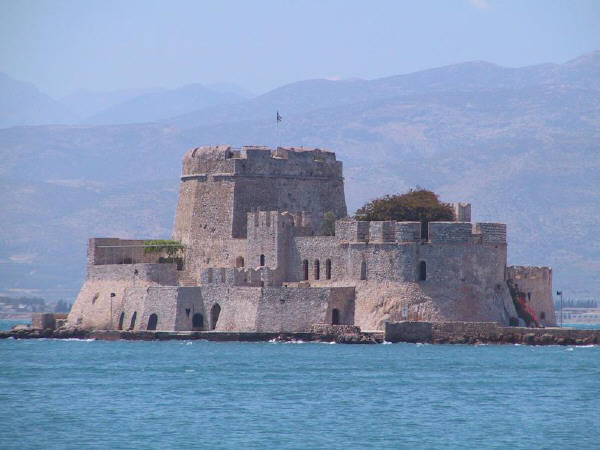
The new U.S. embassy in Malta might possibly pose a dilemma for art critics of the Standard Embassy Design. How do you complain that the new embassy looks like a fortress when the nation it's in is famous for its many historic fortresses? Maybe this time we aren't isolating our mission and 'expressing fear' (and so on) with our defensive architecture. Maybe we're really making an architectural reference to local history and culture?

I mean, the Maltese have been perfecting the art of building fortresses at least as far back as the 16th century, so they ought to the world's leading connoisseurs of the form. I bet the average embassy visitor there can appreciate a good perimeter wall, and will have an enjoyable aesthetic experience while he waits for his visa interview. Anyway, that's my story and I'm sticking to it.

United States Dedicates New Embassy Compound in Valletta, Malta:

Reflecting the importance of the United States’ diplomatic relationship with Malta, ChargĂ© Richard M. Mills, Jr. dedicated the new United States Embassy facility in Valletta today. Malta’s President, George Abela; Prime Minister, Lawrence Gonzi; and Office Director of the U.S. Department of State’s Bureau of Overseas Buildings Operations (OBO), Patrick McNamara, participated in the ribbon cutting ceremony.

The new Embassy facility, located in the Ta’Qali neighborhood of Attard near Ta’Qali National Park, was designed to incorporate green building techniques and to meet the principles of the U.S. Green Building Council for Leadership in Energy and Environmental Design (LEED®) green building rating system. The multi-building complex provides more than 125 U.S. embassy employees, both American and Maltese, with state-of-the-art work space that features a collection of contemporary Maltese, American, and Maltese-American art, curated by the Office of Art in Embassies.

A.I.C.I-SP of Arlington, Virginia constructed the facility, which was designed by the architectural firm Karn Charuhas Chapman Twohey (KCCT) of Washington, D.C. The $125 million project generated jobs in both the United States and Malta. The new facility was completed in May 2011 and, at times, involved more than 800 workers in its construction.

Since the 1999 enactment of the Secure Embassy Construction and Counterterrorism Act, the Department has moved more than 24,000 people into safer facilities. Including the new Embassy in Malta, OBO has completed 82 diplomatic facilities and has an additional 35 projects in design or construction.

Thursday, June 10, 2010

Fortress Waa-gaa-doo-goo

Way back when I first started working for DOS, when I heard someone say the name of the capitol of Burkina Faso I thought it was an in-joke, an exaggeratedly comic foreign-sounding place name. Something along the lines of "Flyspeckistan." But no, Ouagadougou ("Waa-gaa-doo-goo") is the real name of a real city. You can check the pronunciation here. I never got to travel there, but if I ever do, I will search high and low to find a T-shirt from some local university which I hope will read "Ouagadougou You."

But all that is of no importance. I'm posting this because U.S. Embassy Ouagadougou just cut the ribbon on a brand new Fortress Embassy:

U.S. Chargé d'Affaires to Burkina Faso, Samuel C. Laeuchli Patricia N. Moller; the Prime Minister of Burkina Faso, S.E.M. Tertius Zongo; and Acting Managing Director for Operations of the Bureau of Overseas Buildings Operations, John Finnegan, Jr., participated in the official opening of the new embassy in Ouagadougou today.

The New Embassy Compound is the 69th facility constructed by the Bureau of Overseas Buildings Operations since the 1999 enactment of the Secure Embassy Construction and Counterterrorism Act. In the last 11 years, OBO has completed 72 new diplomatic facilities and has moved more than 21,000 people into safe, secure and functional facilities.

The multi-building complex occupies a 12-acre site and provides approximately 300 embassy U.S. direct hire and locally employed staff with over 9,200 net square meters of working space.

The construction contract was awarded to B.L. Harbert International, LLC on September 25, 2007 and a ground breaking ceremony was held on April 1, 2008. The facility was completed on September 25, 2009 and occupied on January 12, 2010. The project was completed ahead of schedule and under budget.


Have fun moving in to the new embassy. I hope it isn't too fortressy for you, and that the air conditioning works.